
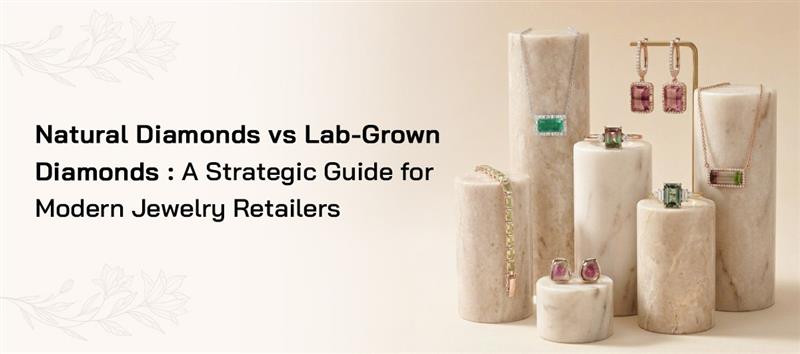
Natural Diamonds vs Lab-Grown Diamonds: A Strategic Guide for Modern Jewelry Retailers
As the U.S. diamond market evolves, jewelry retailers are increasingly navigating customer questions around natural diamonds vs lab-grown diamonds. While both categories have established a presence, the strategic implications for retailers go far beyond appearance or price. For B2B buyers, wholesalers, and fine jewelry retailers, the real comparison centers on long-term value, resale strength, brand positioning, profitability, and customer trust. This guide combines market realities with retail strategy to help you understand why natural diamonds continue to offer stronger long-term advantages.
Understanding Natural Diamonds in the U.S. Retail Market
Natural diamonds are formed deep within the Earth over billions of years. Their geological rarity, limited global supply, and historical desirability have made them enduring symbols of:
- Permanence
- Exclusivity
- Luxury
- Generational wealth
In the U.S., natural diamonds remain dominant in:
- Engagement rings
- Bridal collections
- Heirloom jewelry
- High-carat fine jewelry
- Investment-grade pieces
For retailers sourcing from trusted wholesale partners like Alankar Jewels, natural diamonds provide a foundation for premium positioning and sustainable growth.
What Are Lab-Grown Diamonds?
Lab-grown diamonds are produced in controlled laboratory environments using advanced methods such as HPHT (High Pressure High Temperature) or CVD (Chemical Vapor Deposition). They are chemically and visually similar to natural diamonds.
However, from a retail strategy perspective, their key characteristics differ significantly:
- Unlimited production scalability
- Declining wholesale pricing trends
- Minimal resale demand in secondary markets
- Limited investment narrative
While lab-grown diamonds can serve entry-level or price-sensitive customers, they operate under a fundamentally different value structure than natural diamonds.
Key Strategic Differences Retailers Must Consider
1. Rarity & Supply Dynamics
Natural Diamonds
- Finite global supply
- Geological rarity
- Mining-dependent distribution systems
Lab-Grown Diamonds
- Manufactured at scale
- Expandable supply
- Technology-driven production growth
Scarcity drives value. Natural diamonds maintain intrinsic worth because supply cannot be rapidly increased. Lab-grown diamonds, by contrast, face pricing pressure as production expands.
2. Resale & Long-Term Value
One of the most important differences for retailers is secondary market performance.
Natural Diamonds:
- Recognized resale value
- Trade-in and upgrade potential
- Investment-grade credibility
- Stronger long-term consumer confidence
Lab-Grown Diamonds:
- Limited resale demand
- Rapid depreciation
- No established secondary pricing benchmarks
For retailers offering upgrade programs or lifetime value propositions, natural diamonds provide a far stronger asset base.
3. Price Stability & Margin Protection
Natural diamond pricing is influenced by global supply structures and long-established distribution networks. While fluctuations occur, value benchmarks remain relatively structured.
Lab-grown diamond pricing, however, has seen consistent wholesale reductions due to production scaling. This can result in:
- Margin compression
- Inventory devaluation
- Increased price competition
Retailers heavily dependent on lab-grown inventory may face long-term profitability challenges.
4. Brand Positioning & Luxury Perception
Natural diamonds support:
- Heritage-driven branding
- Premium bridal positioning
- Generational storytelling
- High-end custom design collections
Lab-grown diamonds typically align with:
- Budget-conscious buyers
- Trend-driven segments
- Short-term purchase cycles
Retailers positioning themselves as fine jewelry specialists often find natural diamonds better aligned with luxury branding and long-term credibility.
Why Natural Diamonds Continue to Lead in Bridal & Fine Jewelry
In the U.S. bridal market, symbolism matters. Engagement rings are not simply decorative purchases—they represent permanence, commitment, and legacy.
Natural diamonds reinforce that narrative because they embody:
- Billions of years of formation
- Rarity that cannot be replicated
- Long-standing cultural significance
For retailers working with wholesale diamond jewelry suppliers, natural diamonds offer:
- Higher average transaction values
- Stronger emotional selling points
- Greater client retention through upgrades
- Better performance in high-carat categories
Category Performance: Where Natural Diamonds Excel
Natural diamonds consistently outperform in:
- Diamond engagement rings
- Anniversary bands
- Custom bridal sets
- Diamond stud earrings
- Classic pendants
- Investment-grade solitaires
Classic staples like diamond studs and pendants are often lifetime purchases. Customers prefer natural stones when seeking pieces with enduring significance and future trade-in value.
Ethical Sourcing & Transparency
Modern consumers expect responsible sourcing. Natural diamonds supported by ethical mining practices and third-party certifications maintain strong credibility when retailers provide:
- Clear origin disclosures
- Recognized grading reports (e.g., GIA)
- Transparent supply chain communication
When responsibly sourced, natural diamonds offer both ethical reassurance and financial integrity.
Retail Strategy: Short-Term Pricing vs Long-Term Growth
Lab-grown diamonds may serve:
- Entry-level pricing segments
- Younger, budget-focused buyers
- Promotional inventory strategies
However, natural diamonds support:
- Premium brand identity
- Stable resale frameworks
- Higher margin structures
- Long-term client relationships
- Asset-backed consumer confidence
For retailers building a sustainable fine jewelry brand, natural diamonds provide stronger structural support for growth.
Practical Comparison for Retailers
Strategic Factor | Natural Diamonds | Lab-Grown Diamonds |
Supply | Finite & rare | Unlimited production |
Supply | Recognized & tradable | Minimal secondary demand |
Price Stability | Structured benchmarks | Rapid price decline |
Luxury Positioning | Strong | Moderate |
Investment Narrative | Established | Limited |
Margin Protection | More stable | Increasing pressure |
Final Perspective for Jewelry Retailers
Both natural and lab-grown diamonds have a place in today’s marketplace. However, when evaluating long-term profitability, resale positioning, brand equity, and customer trust, natural diamonds remain the stronger retail asset.
They offer:
Intrinsic value rooted in rarity
Secondary market credibility
Higher-ticket sales opportunities
Generational marketing power
Sustainable luxury positioning
In an evolving U.S. diamond industry, retailers who prioritize natural diamond collections—while strategically managing product mix—position themselves for stability, credibility, and enduring growth. For businesses committed to building a legacy brand rather than competing on short-term pricing, natural diamonds continue to set the benchmark for lasting value.
-

Gold Filled vs Gold Plated vs Solid Gold: What Retailers Need to Know
August 22nd, 2026 -
 August 22nd, 2026
 -
 July 28th, 2026

